Conservation policies and planning under climate change

Niels Strange, Bo Jellesmark Thorsen, Jesper Bladt, Kerrie A. Wilson, Carsten Rahbek. 2011. Conservation policies and planning under climate change. Biological Conservation 144:2968-2977. doi: http://dx.doi.org/10.1016/j.biocon.2011.08.022

Abstract

Biodiversity conservation policies focus on securing the survival of species and habitats according to their current distribution. This basic premise may be inappropriate for halting biodiversity decline under the dynamic changes caused by climate change. This study explores a dynamic spatial conservation prioritization problem where climate change gradually changes the future habitat suitability of a site’ current species. This has implications for survival probability, as well as for species that potentially immigrate to the site. The problem is explored using a set of heuristics for both of two policy objectives focusing on (1) the protection on current (native) species, and (2) all species, including immigrating species. The trade-offs between the protection of native species versus all species is illustrated. The study shows that the development of prediction models of future species distributions as the basis of decision rules can be crucial for ensuring the effectiveness of conservation plans. Finally, it is discussed how more adaptive strategies, that allow for the redirection of resources from protected sites to privately-owned sites, may increase the effectiveness of the conservation networks. Climate change induced shifts in the suitability of habitats for species may increase the value of such adaptive strategies, the benefit decreasing with increasing migration probabilities and species distribution dynamics.

Spatial Prioritization for Conservation and Management: Integrating Vegetation Condition into Conservation Planning

Dr. Kerrie Wilson and Megan Evans were recently awarded funding from the Australian Centre for Ecological Synthesis and Analysis (ACEAS) for a series of workshops that will use the Great Western Woodlands of south-western Australia as a case study to design a method for mapping vegetation condition for a large region. The information provided will assist in the prioritisation of regional conservation efforts. The first meeting is set to take place from 15th-17th November.

The south-west of Australia is a region of national and international ecological significance, and contains the largest intact example of Mediterranean woodland in the world. Stretching almost 16 million hectares east of the Western Australian wheat belt, The Great Western Woodlands (GWW) is significant not only for its natural and cultural heritage, but is also an important area for future economic development. Despite its size and intactness relative to the surrounding agricultural matrix, the GWW faces increasing pressures from too frequent fire, invasive species and the expansion of extractive land uses.

Maintaining the overall intactness of this landscape is considered crucial for preserving large scale ecological and evolutionary processes. An understanding of extent and condition of vegetation will therefore be necessary to inform management decisions at the regional scale, and would assist with State-level strategic planning, as well as region-wide conservation and land use planning initiatives currently underway.  Importantly, a widely used conservation planning tool (Marxan with Zones) now has the capacity to explicitly consider site specific metrics such as vegetation condition when determining priorities for conservation and management, alongside targets for the representation of biodiversity features.

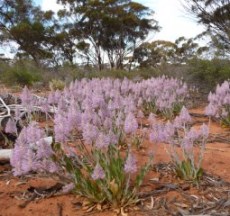
The GWW contains the largest intact example of Mediterranean woodland in the world. Photo: Megan Evans

The GWW contains the largest intact example of Mediterranean woodland in the world. Photo: Megan Evans

However, there is in general a deficit of regional scale mapping of vegetation condition in Australia, despite recent advancements in methodologies for modeling condition and the availability of data which could be used for this purpose.  Moreover, there is exists no framework for incorporating such data into spatial prioritization analyses. As part of the landscape-scale conservation project that is Gondwana Link, the GWW provides a unique test bed for developing such a framework that could provide guidance for other connectivity conservation projects being undertaken in Australia and overseas.

The working group will bring together experts in the fields of conservation biology, remote sensing and vegetation ecology with the common goal of  consolidating approaches and data for regional scale mapping of vegetation condition, and advancing the integration of such information into  spatial conservation prioritization.  Specifically, we will:

  1. Synthesise existing data on vegetation attributes, disturbances and climatic variables which could inform the prioritization of conservation, management or restoration activities at the regional scale,
  2. Develop a methodology for mapping woody vegetation condition at a regional scale, using the GWW as a case study, and
  3. Determine a general framework for integrating information on vegetation condition into spatial conservation prioritization analyses.
Map of southern Western Australia showing the boundary of the Great Western Woodlands. Source: Watson, A., S. Judd, J. Watson, A. Lam, and D. Mackenzie. 2008. The Extraordinary Nature of the Great Western Woodlands. The Wilderness Society, Perth.

Map of southern Western Australia showing the boundary of the Great Western Woodlands. Source: Watson, A., S. Judd, J. Watson, A. Lam, and D. Mackenzie. 2008. The Extraordinary Nature of the Great Western Woodlands. The Wilderness Society, Perth.

Depression and delusion in conservation

Garnett and Lindenmayer argue that like Cassandra of Greek mythology, "foretellers of doom alone will always be ignored until too late"

By  Luke P. Shoo

Conservation biology is generally regarded as a crisis discipline (Soulé 1985). However, consensus on the nature of the discipline does not extend to how the science should be communicated in order to further the primary goal of conserving biodiversity.  Garnett and Lindenmayer (2011) contend that relentless communication of an impending mass extinction may actually be counterproductive for conservation and cite evidence from other disciplines (medicine, public health and road safety) that  bad news needs to be balanced by empowerment if political and social change is to be achieved. In a counterpoint, Arlettaz et al. (2011) argue that a focus on good news could be highly detrimental, engendering a lack of perspective and giving academics and politicians the illusion that the crisis could be solved without questioning business-as-usual practices.

An ongoing debate

This debate, played out in the journal Trends in Ecology and Evolution, has not occurred in isolation. Similar exchanges have featured in related journals including Conservation Biology (Beever 2000; Orr 2004; Webb 2005; Knight 2007; Nugent 2007; Orr 2007), Bioscience (Swaisgood and Sheppard 2010; Patten and Smith-Patten 2011; Swaisgood and Sheppard 2011) and probably elsewhere. It appears, then, that there is a fine line to be negotiated when broadcasting conservation news. We may want to combat conservation despair (Swaisgood and Sheppard 2010) but at the same time avoid the perverse outcome of breeding self-deceitand naive optimism (Noss 1995; Webb 2005).

Arlettaz et al. say that focusing on "good news" through fear of the Cassandra syndrome may be just as detrimental

‘Good news’ conservation

Some practitioners have noticed that many good news stories have failed to attract wide attention and in response have begun the task of amassing and actively communicating examples of conservation successes. In a recent example, Sodhi et al. (in press) provide a global review of conservation interventions that have likely reduced extinction and endangerment of vertebrates and environmentally damaging practices of corporations. For instance, establishment of protected areas has reduced carbon emissions from deforestation in the Brazilian Amazon and better enforcement of whaling regulations has prompted a population recovery of Pacific grey whales (Eschrichtius robustus).

Reframing the question

Much of the argument against the presentation of good news is based on the negative ramifications of cultivating blissful ignorance. However, it could well be argued that “the problem lies with ignorance, not with optimism, because ignorant pessimism is as problematic as ignorant optimism” (Beever 2000). Clearly, then, there is a role for evidence based conservation (Sutherland, Pullin et al. 2004). Moreover, there is a need to give heed to context when communicating evidence of success.

One way to do this is to  ask the question: how different would the world look in the absence of conservation action (Ferraro and Pattanayak 2006)? For example, Hoffmann et al. (2010) estimate that conservation actions have reduced the rate of deterioration in the status of the world’s animals by at least one-fifth (i.e. conservation impact). Nevertheless, almost one-fifth of all living species remain classified as threatened and on average 52 species will move one category closer to extinction each year (i.e. context) (Hoffmann, Hilton-Taylor et al. 2010).

The impacts of conservation efforts should be communicated within the correct context. Adapted from Rodrigues et al. 2006 http://www.sciencemag.org/content/313/5790/1051.full

Undoubtedly, the effects of some actions will be difficult to measure (Brooks, Wright et al. 2009). There may also be surprises that prompt us to rethink the merits of some conservation practices (Bottrill, Walsh et al. 2011). The point is that studies designed to properly evaluate the efficacy of conservation interventions can provide the raw material to report on conservation success in proper context with the ongoing reality of problem. Presenting a more complete picture may help readers resist any tendency to become environmental Pollyannas* whilst guard against conservation apathy that can stem from a mental diet composed exclusively of bad news.

*an excessively or blindly optimistic person as used by Noss (1995).

References Read more of this post

The Effect of Carbon Credits on Savanna Land Management and Priorities for Biodiversity Conservation

Douglass, L. L., H. P. Possingham, J. Carwardine, C. J. Klein, S. H. Roxburgh, J. Russell-Smith, and K. A. Wilson. 2011. The Effect of Carbon Credits on Savanna Land Management and Priorities for Biodiversity Conservation. PLoS ONE 6:e23843. doi:10.1371/journal.pone.0023843

Abstract

Carbon finance offers the potential to change land management and conservation planning priorities. We develop a novel approach to planning for improved land management to conserve biodiversity while utilizing potential revenue from carbon biosequestration. We apply our approach in northern Australia’s tropical savanna, a region of global significance for biodiversity and carbon storage, both of which are threatened by current fire and grazing regimes. Our approach aims to identify priority locations for protecting species and vegetation communities by retaining existing vegetation and managing fire and grazing regimes at a minimum cost. We explore the impact of accounting for potential carbon revenue (using a carbon price of US$14 per tonne of carbon dioxide equivalent) on priority areas for conservation and the impact of explicitly protecting carbon stocks in addition to biodiversity. Our results show that improved management can potentially raise approximately US$5 per hectare per year in carbon revenue and prevent the release of 1–2 billion tonnes of carbon dioxide equivalent over approximately 90 years. This revenue could be used to reduce the costs of improved land management by three quarters or double the number of biodiversity targets achieved and meet carbon storage targets for the same cost. These results are based on generalised cost and carbon data; more comprehensive applications will rely on fine scale, site-specific data and a supportive policy environment. Our research illustrates that the duel objective of conserving biodiversity and reducing the release of greenhouse gases offers important opportunities for cost-effective land management investments.

A comparison of the difference in selection frequency, a measure of investment priority, between scenarios 1 and 2.

Follow

Get every new post delivered to your Inbox.